Python Challenge - Level 4
Problem
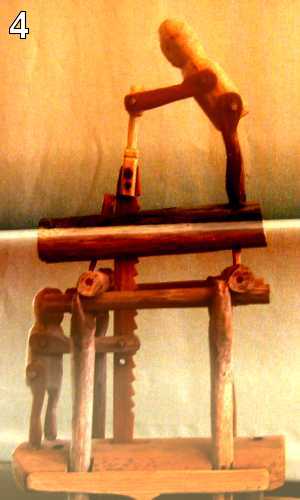
Clicking the image takes you to:
http://www.pythonchallenge.com/pc/def/linkedlist.php?nothing=12345
The page responds with:
and the next nothing is 44827
Follow the chain: update the URL with the new number and keep going. The chain eventually terminates with the answer. Two tricky branches you'll hit along the way:
"Yes. Divide by two and keep going."→ divide the current number by 2- The chain loops back to the beginning — you need to detect termination
Solution
Python
import urllib.request, re

url = "http://www.pythonchallenge.com/pc/def/linkedlist.php?nothing=%s"
num = "12345"
pattern = re.compile(r"and the next nothing is (\d+)")

while True:
    content = urllib.request.urlopen(url % num).read().decode()
    print(content)
    if "divide" in content.lower():
        num = str(int(num) // 2)
        continue
    match = pattern.search(content)
    if not match:
        break
    num = match.group(1)
Result: peak.html
Go
package main

import (
    "fmt"
    "io"
    "net/http"
    "regexp"
    "strconv"
    "strings"
)

func main() {
    urlFmt := "http://www.pythonchallenge.com/pc/def/linkedlist.php?nothing=%s"
    num := "12345"
    re := regexp.MustCompile(`and the next nothing is (\d+)`)

    for {
        resp, _ := http.Get(fmt.Sprintf(urlFmt, num))
        body, _ := io.ReadAll(resp.Body)
        resp.Body.Close()
        content := string(body)
        fmt.Println(content)

        if strings.Contains(strings.ToLower(content), "divide") {
            n, _ := strconv.Atoi(num)
            num = strconv.Itoa(n / 2)
            continue
        }
        m := re.FindStringSubmatch(content)
        if m == nil {
            break
        }
        num = m[1]
    }
}
Rust
use reqwest::blocking::get;
use regex::Regex;

fn main() {
    let url_fmt = "http://www.pythonchallenge.com/pc/def/linkedlist.php?nothing={}";
    let mut num = "12345".to_string();
    let re = Regex::new(r"and the next nothing is (\d+)").unwrap();

    loop {
        let url = url_fmt.replace("{}", &num);
        let content = get(&url).unwrap().text().unwrap();
        println!("{}", content);

        if content.to_lowercase().contains("divide") {
            let n: u64 = num.parse().unwrap();
            num = (n / 2).to_string();
            continue;
        }
        match re.captures(&content) {
            Some(caps) => num = caps[1].to_string(),
            None => break,
        }
    }
}
Language Comparison
| Feature | Python | Go | Rust |
|---|---|---|---|
| HTTP GET | urllib.request.urlopen() — stdlib, synchronous |
net/http.Get() — stdlib, synchronous |
reqwest::blocking::get() — external crate |
| String formatting in URL | %s / .format() |
fmt.Sprintf |
str::replace or format! macro |
| Integer division | // operator |
/ on integers (truncates) |
/ on integers (truncates) |
| Regex capture group | .group(1) |
FindStringSubmatch()[1] |
caps[1] or .get(1) |
| Loop control | continue / break |
continue / break |
continue / break |
Key insight: This puzzle is a linked list traversal over HTTP — the stateful loop pattern is essentially the same in all three languages. The biggest ergonomic gap is HTTP: Python's urllib is clunky but stdlib; Go's net/http is production-grade and stdlib; Rust needs reqwest (external, async by default — use the blocking feature for simplicity).
Next Level
Recommended ReadingSponsored
Python Challenge Solutions
Sponsored: Coursera
Python Challenge Solutions
Sponsored: Coursera