
The Systems Engineer’s Library & Workstation Gear
A curated, battle-tested collection of foundational classics in operating systems, distributed architectures, homelab edge computing, and engineering ergonomics.
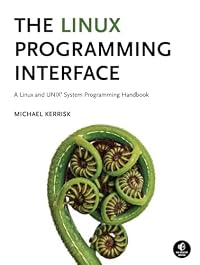
The Linux Programming Interface
By Michael Kerrisk · 1,552 pages"The undisputed bible of Linux and UNIX system programming."
Written by the longtime maintainer of the Linux man-pages project. Covers every single Linux system call in exhaustive, crystalline detail—from epoll readiness multiplexing and signal masks to virtual memory mappings and the VFS layer.
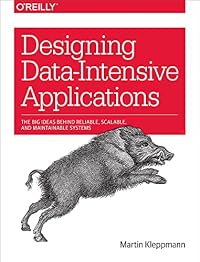
Designing Data-Intensive Applications
By Martin Kleppmann · 616 pages"The premier modern architecture book for scalable, reliable systems."
The book that bridges the gap between academic distributed systems theory and production engineering. Demystifies replication, partitioning, transactions, consensus (Raft/Paxos), and batch/stream processing architectures.
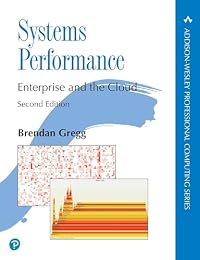
Systems Performance: Enterprise and the Cloud
By Brendan Gregg · 960 pages"Master operating system observability, profiling, and tuning."
Authored by Intel fellow and former Netflix performance architect Brendan Gregg. Teaches you how to methodically diagnose latency bottlenecks across CPU architectures, memory paging, file systems, disk I/O, and container cgroups.
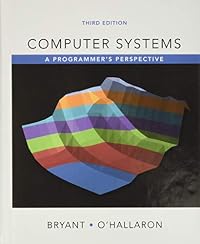
Computer Systems: A Programmer's Perspective
By Randal E. Bryant & David R. O’Hallaron · 1,152 pages"Understand how hardware executes and optimizes your code."
The legendary Carnegie Mellon textbook (CS:APP). Shows what actually happens when your program compiles, links, runs, and touches hardware caches, virtual memory pages, and pipeline registers.
Database Internals: Distributed Storage & Processing
By Alex Petrov · 376 pages"How real-world storage engines and distributed databases tick."
A masterclass on modern database storage architecture. Part 1 breaks down storage engines (B-Trees, LSM-Trees, write-ahead logs); Part 2 explores distributed algorithms (two-phase commit, Paxos, Raft, vector clocks).
BPF Performance Tools: Linux System & App Observability
By Brendan Gregg · 880 pages"The authoritative playbook for dynamic tracing with eBPF."
Contains over 150 turnkey tools and tracing scripts. Demonstrates how to use eBPF, BCC, and bpftrace to inspect kernel tracepoints, kprobes, uprobes, and network sockets with sub-microsecond overhead.
Operating Systems: Three Easy Pieces (OSTEP)
By Remzi H. Arpaci-Dusseau & Andrea C. Arpaci-Dusseau · 714 pages"The three pillars of OS design: Virtualization, Concurrency, and Persistence."
One of the clearest, most readable technical books ever published. Strips away esoteric academic jargon and directly explains CPU virtualization, page tables, locks, condition variables, file systems, and crash consistency.
A Philosophy of Software Design
By John Ousterhout · 190 pages"Fighting software complexity with deep modules and strategic design."
Stanford professor and Tcl creator John Ousterhout tackles the #1 challenge in software engineering: managing complexity. Introduces foundational mental models like "Deep Modules vs Shallow Modules" and "Define Errors Out of Existence."
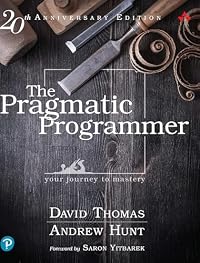
The Pragmatic Programmer: 20th Anniversary Edition
By David Thomas & Andrew Hunt · 352 pages"Your journey from developer to true software master."
Timeless wisdom on software craftsmanship. Filled with mental models: Software Entropy (Broken Windows), Tracer Bullets, DRY, Orthogonality, and Domain Languages. A book you reread every few years and take away fresh insights.
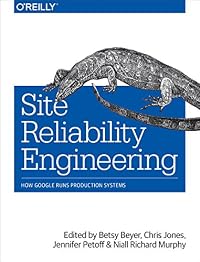
Site Reliability Engineering: How Google Runs Production Systems
By Betsy Beyer, Chris Jones, Jennifer Petoff, Niall Richard Murphy · 550 pages"What happens when a software engineer is tasked with operations."
The book that created the SRE revolution. Details how Google manages planet-scale infrastructure with SLIs, SLOs, Error Budgets, automated incident response, blameless postmortems, and distributed monitoring.

Beelink Mini PC (AMD Ryzen & Dual 2.5GbE)
By Beelink · Dual NVMe / 64GB Max"The gold standard compact node for self-hosted Proxmox and k3s clusters."
Packs multi-threaded AMD Ryzen power, dual-channel DDR4/DDR5 upgradeable RAM up to 64GB, dual M.2 NVMe slots, and dual Gigabit/2.5G network interfaces into a 4.5-inch chassis that idles under 15 Watts.

Raspberry Pi 5 (8GB RAM)
By Raspberry Pi Foundation · Arm64 Quad-Core 2.4GHz"The definitive low-power platform for network edge services and DNS sinkholes."
Features a 2.4GHz 64-bit Arm Cortex-A76 processor, PCIe 2.0 interface for high-speed NVMe storage, and dedicated Gigabit Ethernet. The premier device for always-on Pi-hole, Tailscale subnet routers, and Home Assistant.

Logitech MX Master 3S Wireless Mouse
By Logitech · 8,000 DPI / MagSpeed"The industry-standard productivity mouse engineered for long coding sessions."
Features an ergonomic hand-contoured thumb cradle, ultra-quiet acoustic microswitches, an 8,000 DPI Darkfield sensor that tracks on glass, and the MagSpeed electromagnetic scroll wheel capable of flying through 1,000 lines of code per second.
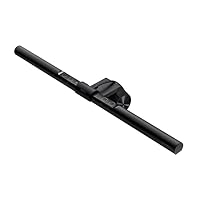
BenQ ScreenBar Monitor Light Bar
By BenQ · Asymmetric Optical Design"Eliminate screen glare and optical fatigue during intense nighttime engineering."
Engineered with patented asymmetric optical physics that shines light exclusively on your desk and keyboard with zero glare or reflection on your display panel. Auto-dimming ambient light sensors dynamically calibrate color temperature.
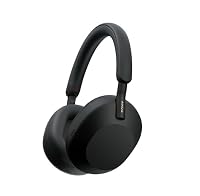
Sony WH-1000XM5 Noise Cancelling Headphones
By Sony · Dual-Processor ANC"Create an acoustic isolation bubble for uninterrupted, flow-state deep work."
Equipped with 8 noise-sensing microphones and dual integrated V1/QN1 audio processors. Eliminates office chatter, keyboard clatter, and ambient HVAC hums to protect your working memory from cognitive context switching.