Python Challenge - Level 2
Problem
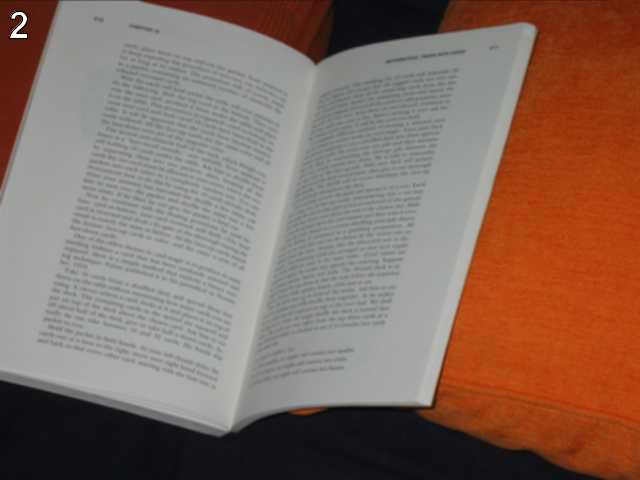
recognize the characters. maybe they are in the book, but MAYBE they are in the page source.
The page source contains a huge HTML comment block packed with noise characters ($@#!^ etc.) — the actual message is hidden as the rare letters that appear only once.
Solution
Python
collections.Counter is the natural fit — count all characters, filter to those appearing exactly once:
import urllib.request, re, collections

html = urllib.request.urlopen("http://www.pythonchallenge.com/pc/def/ocr.html").read().decode()
data = re.findall(r"<!--(.*?)-->", html, re.DOTALL)[-1]

freq = collections.Counter(data)
answer = "".join(c for c in data if freq[c] == 1 and c.isalpha())
print(answer)  # equality
Go
Go uses a map[rune]int for frequency counting:
package main

import (
    "fmt"
    "io"
    "net/http"
    "regexp"
    "unicode"
)

func main() {
    resp, _ := http.Get("http://www.pythonchallenge.com/pc/def/ocr.html")
    body, _ := io.ReadAll(resp.Body)

    re := regexp.MustCompile(`(?s)<!--(.*?)-->`)
    matches := re.FindAllSubmatch(body, -1)
    data := string(matches[len(matches)-1][1])

    freq := make(map[rune]int)
    for _, c := range data {
        freq[c]++
    }

    var answer []rune
    for _, c := range data {
        if freq[c] == 1 && unicode.IsLetter(c) {
            answer = append(answer, c)
        }
    }
    fmt.Println(string(answer)) // equality
}
Rust
Rust uses HashMap and a two-pass approach:
use std::collections::HashMap;

fn find_rare(data: &str) -> String {
    let mut freq: HashMap<char, usize> = HashMap::new();
    for c in data.chars() {
        *freq.entry(c).or_insert(0) += 1;
    }
    data.chars()
        .filter(|c| c.is_alphabetic() && freq[c] == 1)
        .collect()
}

fn main() {
    // In practice: fetch HTML, extract last HTML comment block
    let data = "%%$@_$^__#)eq^u)&!al_+]!*i@&^t}@[@y%]"; // simplified
    println!("{}", find_rare(data)); // equality
}
Language Comparison
| Feature | Python | Go | Rust |
|---|---|---|---|
| Frequency counting | collections.Counter — one call |
map[rune]int — manual loop |
HashMap<char, usize> — manual loop |
| Filter rare chars | Generator expression | Second loop over runes | .filter() on iterator chain |
| Regex with DOTALL | re.DOTALL flag |
(?s) inline flag |
(?s) via regex crate |
| HTML fetching | urllib.request stdlib |
net/http stdlib |
reqwest crate (external) |
Key insight: Python's Counter makes frequency analysis a one-liner. In Go and Rust, the same logic requires explicit map operations — but the algorithmic clarity is identical. The real difference is in the HTTP + regex ecosystem: Python's stdlib covers both, Rust typically reaches for external crates.